


Borrowing a line from the online re-incarnation of Bunuel's Belle de Jour, 'What does it take for a girl to get wiki'd?'
It's the weekend already. I'm still working and I need an ego trip-fast.
Somebody please wiki me!
What does it take for a girl to get wiki'd??

Vernacular architecture?

This sounds like I'm nursing a major post-colonial hangup but I will be having an exhibition exploring how our perceptions of tasteful design and architecture are largely shaped by western standards.
The exhibition poster was meant to emulate Tel Quel(a 1960's journal of critical theory)'s cover, in reference to the theme of critical theory of the exhibition.
The exhibition calls upon Foucauldian power/knowledge dichotomy(in this case, power supposedly belongs in western hands, leading our appreciation of architecture and design to be predicated on very western terms) and the associated calls in privileging marginalized bodies of knowledge(n this case, vernacular architecture). The exhibition also explores how the term of 'vernacular architecture' is similarly politicized and possible a misnomer, given the dominance of western or largely western educated articulators of the vernacular aesthetic.
Whilst largely theoretical, the exhibition aims towards some visually spectacular moments- with the conversion of the courtyard into a sacred wood(s)- a term employed by Jean Nouvel(the architect for Quai Branly)in reference to objects that are devoid of western architectural influence. Visitors are encouraged to dispense with their preconceived notions of design and architecture before entering the premises of the sacred wood(s).
In accordance with the Lettrist tradition(an intellectual movement in the 1960's), the exhibition will include a public disruption as part of its setup.
More information and details on the exhibition can be found here:
Cluster houses

Increasingly well-(and possibly, unrealistically) landscaped, I've previously dubbed cluster houses as the 'urban compromise made palatable'- where a garden space is sometimes allocated to your plot, providing a feel of living in a landed property without the associated costs and maintenance.
Whilst most of the cluster houses involve mid-range private housing:
"Located close to Novena MRT, this development of cluster housing(I do hate the term 'cluster housing'- it emphasizes the communal nature of the development and sounds horribly plebeian) comes with a swimming pool and landscaped water features. There are two semi-detached units with about 30 odd cluster houses. The cluster units come with either a balcony and a garden shaft( garden 'shafts' don't sound too great either, but a reality in land-scarce Singapore housing) in the basement or a private jacuzzi and a private entrance into the pool (which might not exactly suit some people given that privacy infringement and possible noise from floating toddlers swimming right up to your doorstep). The corner units in the development come with that all-too-rare asset- an actual, albeit small-ish but still a treat nonetheless- private garden.
Units come in either 3,4 or 5 bedroom configurations with roughly the same built-ups. Great modern finishes- rough hewn plaster work( reminds me of the heavily textured walls of Moroccan casbahs) for the planters cum privacy screens in the balconies, clean-lined kitchens and toilets as well as louvred, adjustible windows in the master bedroom that allows just the right amount of light desired.
The risk of any cluster development is the loss of privacy and the feeling of being encroached upon. This has partially been resolved by the planter boxes, which come readily landscaped, that provide some privacy when using the balconies. Design details are interesting- the wooden beams that jut out to help one into the pool; an interesting structural contrast to the static calmness of the pool. Viewed in profile- the development makes a pretty picture though a tad overdesigned; an acceptable compromise for a cluster development."
"A modern development of cluster houses off Sixth Avenue with appealing design and impressive facilities. Some elements of the landscaping draws inspiration from Luis Barragan in its attention to colour juxtaposed against clean modernistic planes of concrete and water features.
Designed with tropical living in mind- the cluster houses have balconies and outdoor spaces aplenty. Wooden louvres creating a semblance of protection from the outdoors are frequently replicated themes, both in the form of the outdoor gate to the house as well as the 'skylight' in the basement.
Plenty of natural light has also been allowed in with the generous use of glass- being the medium of choice for bedroom walls and kitchen walls; resulting in a seamless integration of these spaces.
With an appealing colour palette of sand, slate and cappuccino; these cluster houses are outstanding in its conception and design. The limestone flooring in the bathrooms re emphasize the tropical theme- allowing the unusual choice of material to be both aesthetic and functional for its non-slip qualities.The maid's room in the basement is almost chic with its segregated room, bath and washstand.
Facilities are in conformity with Barragan's theme of colour and clean modern planes, infused with a touch of the tropical in the use of materials like limestone and dark wood. A bar counter fronts the swimming pool. Grounds also include a reflecting pool, a gym, sauna, hot and cold pools as well as the best looking changing rooms in any development."
or the more child-friendly version:
Set within the green neighbourhood of Swiss and Dutch clubs, this development of cluster houses offers vibrant community living in an upmarket area characterised by sedate landed homes and quiet neighbourhood restaurants.
Built around the townhouse concept, there are private parking lots at the doorstep of every home. Tropical flowers set in clay pots set a spa-like tone at the entrance of every home.
Interiors are predictably modern- with different layouts available within the development. Units typically come with a maid's room, 4 bedrooms, roof terraces size varies) and different kitchen layouts.
The array of facilities is impressive, with creative solutions tweaked out of every architectural constraint. The retaining wall of the highway has been converted to emulate a natural limestone quarry overlooking the pool. The gym which is set below a walkway is afforded an inspiring view of the waterfall steaming down its windows; the jacuzzis in the changing room overlook a zen-like arrangement of bamboo trees.. Undoubtedly, the child-friendly facilities(there is a child's games room) and the proximity to international schools will attract considerable families with children of school-going age-a factor that might not work for everybody."
The concept of cluster housing has increasingly reached the higher end of the market, indicating that the receptivity towards cluster housing might not just be about costs, but the spaciousness and feel of living in a landed property without the maintenance concerns and possible security issues.
This:
was amongst the first, more high profile cluster projects in the high end residential market.
while these rental bungalows:
have proven that the concept of cluster housing for the high end rental market works, given the right concept.
Bachelor editions
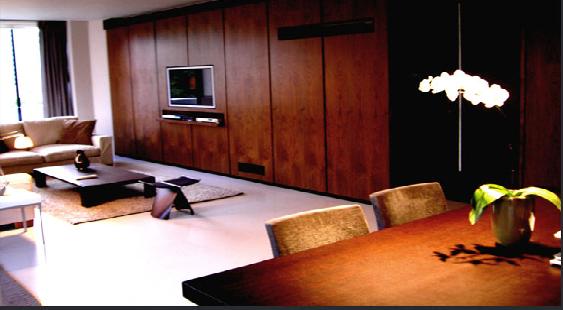
There is an increasing genre of singles or newlyweds purchasing starter homes and giving them a completely new look. Typically, these apartments or houses are small and centrally located,the latter being a prerequisite especially for singles. Young couples, though, are more ready to venture into neighbourhoods like the East Coast, or the more residential suburbs of Bukit Timah- the latter of course, being more characterised by more privacy, space and greenery with the downside of not being able to walk down the street for your morning cup of coffee.
Magazines like Home and Decor, Space, Form, the design and architectural pages of Straits Times- are replete with images of homes for young singles and couples.
It's an interesting new market- more singles are opting to live on their own, driving up the demand for well-located, small, affordable homes. Of late, the demand has obviously been greater than the supply- affordable walkups enviably located in a quiet, green neighbourhood on Orchard Rd typically being snapped up before they are even advertised, driving singles looking to buy further up into areas like Novena, the East Coast or even Pasir Panjang(I've always been partial to the charms of Pasir Panjang myself- vaguely remember a relative living very close to Haw Par Villa so trips to the grotesque theme park became a weekly affair). Another hip alternative seems to be the conservation flats around Chinatown- atmospheric neighbourhoods with an eclectic tenant mix of singlet-clad, mahjong playing ah peks and your newly returned Singaporean repatriate. The leafy surroundings, proximity to good food and art deco structures add to the appeal of these places- despite the 99 year leaseholds.
In a country where private real estate prices are precariously out of reach for most young couples(real estate and car mortgages being disproportionate to what people earn as some point out, thanks to a heavily-subsidized public housing system and scarce land on both counts), the genre of apartments for singles and couples tend to be a very niche market and heavily design-conscious.
Real Estate Wish List
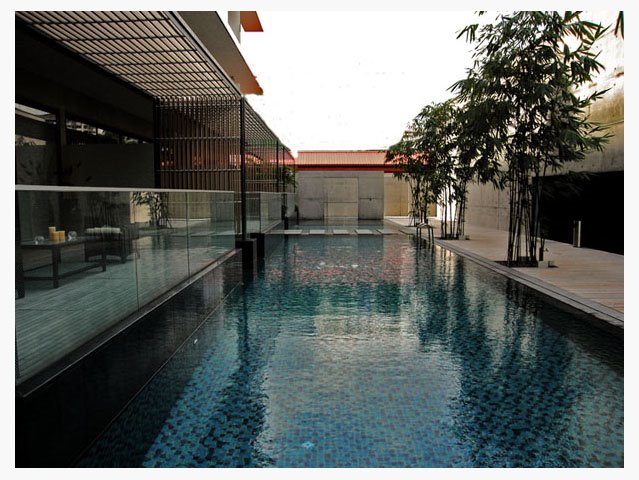
Coming purely from an agent's perspective(one dealing with interesting, architecturally distinguished properties), the following are on my real estate wish list as the sort of properties I would like to see in the Singapore context:
(In no particular order)
1. A bungalow modeled after a Shanghainese courtyard house.
Something akin to the premises used by the Chicago Graduate School of Business in Penang Road- I understand it's a bungalow owned by a 'very rich local Chinese businessman'.
Or what used to be Asian restaurant(on the fringe of the Central Business District)- remember the Asian-themed restaurant whose main PR line were their cheongsam-clad waitresses "with no underwear"???!! I wished i had kept the flyers so I could upload them here. It's now occupied by a Healthy living products company(can't remember the exact name) and as I understand it, used to be a temple.
A re-created version with that theme in Singapore would be Min Jiang, the Bedmar & Shi designed restaurant in Rochester Park. Again- these are commercial/institutional spaces. Would love for something like that recreated in a residential context.
2. An art deco penthouse.
Already exists in Singapore. The penthouse boasts gorgeous art deco lines and comes with a swimming pool. Now why isn't that cool?
3. A mid-century modern re-creation.
I saw a townhouse with a beautiful, central spiral staircase and ceilings of wooden planks that totally evokes the mid-century modern era. Unrenovated and in original condition, I believed the light fittings and switches had never been changed(they still worked, miraculously).
Pictures of a renovated unit:
http://www.urbanespaces.com/townhsewithpatio.html
The P.S cafe at Dempsey, with its all-glass facade, the green natural surroundings, the linoleum-like flooring and the doris day chairs- evokes the mid-century modernist feel best.
4. And of course- that Moroccan shophouse:
http://www.urbanespaces.com/a%20few%20inspirational%20homes.html
5. A totally cool boutique hotel-like development.
Most of the developments that have been created around a hip concept have largely bought into their own hype(and i suppose, so do most boutique hotels). Beyond the flash marketing, the hyped-up manifestos, the 'context' for these developments seem sorely lacking and for all(or despite all) the great and tasteful finishings, the whole thing becomes rather aspirational and becomes merely another piece of real estate. Am looking for something totally understated, completely looked over by the media, keeping to and located within a suitable 'context'.
The closes I've found so far was one near the Mohamed Sultan area. With an unpretentious name(which I'm completely disappointed by .I was hoping for a development name that alludes to its hip factor- notice how the boutique hotels with a following of hipsters all have names like 'The Atlas' or 'The Establishment' or a simple, exotic name like 'Puro'?), an unglorified T.O.P date and completely looked over by the media, the development had amazing context.
With a building facade covered by the same acid-etched concrete slabs popularized by Tadao Ando, door frames in common areas of anodized steel, supplemented by glass and distressed oak wood and a pool and gym area that always makes you feel like you're living in a hip boutique hotel(in the best sense possible)- the development also keeps to and retains amazing context.
Housed right next to abandoned warehouses(actualy warehouses- entities that served as godowns for goods transported along the river system) with a slew of interesting graffiti, there could not be a more suitable and fitting context to the development.
In my usual obsessed, though fickle manner- I've declared this development my favourite of the moment(and the moment typically lasts 2-3 years)- Development is pictured above- more photos, along with the graffiti is coming next!
The Specter of the Spectacle-Re-creating Simulacra
Have not been able to shake off my sense of dramatics-
Guy Debord, leader of the Situationists International, warned of the 'Spectre of the Spectacle'- where one work of art inspires its own set of reproductions and is copied over and over again, further distancing us from the real experience.
Showflats, a space where 'apartment living' or quite often, 'aspirational living' is re-created, have de-generated into copies of one another. It's the same, frozen look with fake books lining the shelves, plush furry upholstery decidedly unsuitable for our tropical climates, lots of leather, plenty of mirrors working around the dictum of mirrors=illusion of more space, ambient lighting and a set temperature conducive to the showflat-shopping process.
At the other extreme, I've seen showflats that try to break away from the mould by having dangerously curvy staircases- helmed by rough ropes- to the second floor, unwieldy pieces of art in the centre of what is an ultimately small space and a minimum of plush toys(cushions/tiny roll blankets/roll pillows).
My objections with showflats, beyond that unrealistic re-creation of what 'living' is supposed to be like, is their increasing like-ness to each other. It's become a polished, professional way of engendering more sales, along with bland brochures, silly tv ads of happy families engaged in some activity convenient to the development.
If we're going to pariticipate in a system where experiences are mediated by images, could they at least not be tiresome copies of one another?
Lofts as a state of mind
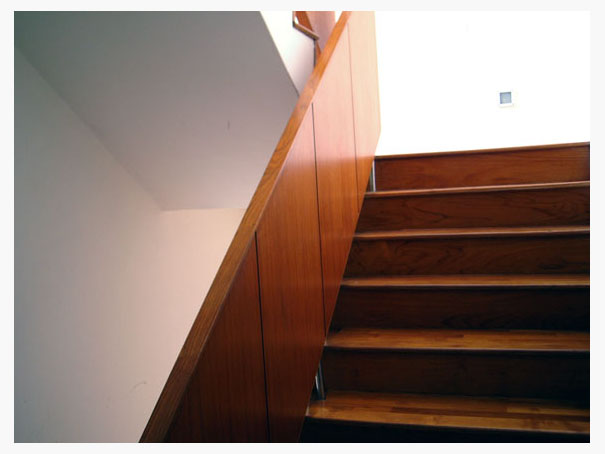
I know that in my early days in real estate, I advertised an 'apartment with the feel of a converted warehouse loft'- and all it meant was a brand new penthouse within an edgy, fashionable development that generously inculcated the use of perforated steel on its staircases leading to the roof terrace as well as the flooring of the roof terrace(that means that from the staircase you'd be able to see 30 floors down!)
Remember one really cool potential tenant responding and I had to explain to him that, as far as I knew, we didnt have loft coversions(yet), although I wouldnt be surprised that we would sometime 'in the near future'.
I hardly advertise in the mainstream media nowadays but have always wondered on how the term 'lofts' have that great effect of adding that much needed boost of 'cool' to an otherwise stodgy apartment. An ad in the real estate section that reads- '1 bedroom shophouse with loft and roof terrace' seems to have a lot more potential than
'2bedroom shophouse. well renovated'. At least it does to me. While sometimes the 'loft' doesnt quite live up to expectations- the apartment actually turning out to be a rather stodgy get-up, the 'loft' space remains a rather intriguing feature in the real estate market.
While 'lofts', strictly speaking, used to be the chic bohemian habitat of the proverbial starving artist, the ensuing gentrification of these neighbourhoods successfully edged out its very founders. While we see, within the local scene, black and white houses being re-created, the genre of loft apartments are increasingly taken to mean designer-outfitted, brand new developments with a rare, precious appeal to the young, moneyed set.(I know of at least one development in Dubai that sought to recreate the heavy, industrial metal doors, the exposed brick walls and stainless steel fittings within a brand new development).
Going around trying to see the 'potential' of various pieces of property in a day sometimes encourages one to identify distinctive features in certain developments that make it amenable to conversion for a certain type of property.
There is one development in Orchard- large unbits at 3500 or 4200sqft that I've always thought had the utmost potential for a 'loft-like' space(not loft-like as in high ceilings but the fluidity of space within an apartment). With exposed brick walls, large, inherently modern swivel doors, beautiful pine wood flooring- it'd be great to knock down all walls and patitions and create beautiful, seamless spaces- an open concept kitchen, toilets of full glass walls, bedrooms that are similarly distinhgihed only by glass walls peppered the occasional conspicuous lifestyle statement(a harp? a grand piano of lucite? a workout corner?) and in my mind- it's always sort of fantastic.
Philippe Starck finishings
When a real estate ad in a mainstream paper declares:'Philippe Starck finishing' ,
'modern loft' and 'zen minimalist apartment' become keywords /phrases that become part of real estate marketing jargon, possibly it's time to move on.
Judging by some of the apartments I've seen that were advertised as 'zen minimalist', there are some peculiar interpretations of the minimalist aesthetic out there.
We all know of the commercial sell-out of the enterprising Philippe Starck. Zen minimalism is somewhat 'done' but most of us still adhere to variations of it.
So in an industry where there is considerable jostling to be considered as an arbiter of taste- who gets to define what is 'cool' and what is not?
I once wrote an essay on the Foucauldian concept of the power/knowledge dichotomy and how it plays out in an industry unabashedly subjective(where the correlation between power and knowledge becomes considerably tighter and self-fulfilling).
Adherence to google's motto of 'don't be evil'- can be relatively difficult- sure, it's in my/our interests to be considered the arbiter of taste and to consequently sideline the rest as 'mainstream'. The design-conscious real estate scene is an industry that I would prefer to think of as a non-mainstream, marginalized segment of the real estate industry and according to Foucauldian logic, marginalized= not evil, although I sometimes wonder if today, niche, designer conscious markets(in real estate or otherwise) are exercising a tyranny all of their own through the perpetual documentation of what's fashionable and cool and what's a pathetic interpretation.
It's the tyranny of the (supposedly marginalized) powerful few over the mainstream public, which puts part of the Foucauldian logic on its head, doesn't it.
For all the above rantings, I'd probably be including a post where I (not-so-subtly)sniff at supposed mediocre interpretations of modern design and architecture.
The death knell of the en bloc purchase

Was that a little too dramatic? I was honestly surprised by the success of the en bloc process of Habitat 1- the development quite recently received a major facelift and now has an enivably sleek, modern pool area, a soignee entrance, huge swivel doors of glass with oak handles connecting the reception area to the pool and an incredibly happy guard sitting behind the lit onyx reception area(he has a streamlined, flat screen computer monitor via which he monitors the goings- on in the building). To me- the renovations were done a lot more tastefully and speaks more of haute condo living than most brand new developments that somehow evince a crass, copied interpretation of the fashionably contemporary 'modern' aesthetic.
And when I conducted my architectural tour as part of the Singapore Design Festival last year, we definitely made a stop for Habitat 1, where I remembered telling those who attended that, sadly, Habitat 2 has gone en bloc. Didn't think that it was quite logical for a condo with newly renovated grounds to go en bloc.
So another building with 'architectural pedigree', albeit a diluted one, is going to make way for a new development on downtown Orchard Rd and the architect for the building, Moshe Safdie, has been roped in as one of the architects for the IR project. Am not sure what I'll be having on the architectural tour next year- conservation housing is so 'done' and well-chronicled. Black and white houses?-we have coffee table books dedicated towards them. Possibly, in the midst of cashing in on the en bloc craze, Singapore's forgetting its modern architectural gems?
Should you be interested in taking the self-guided tour(a version of what we did for the Design Fest last year)- refer to this self tour guide.
The most interesting pieces of residential real estate
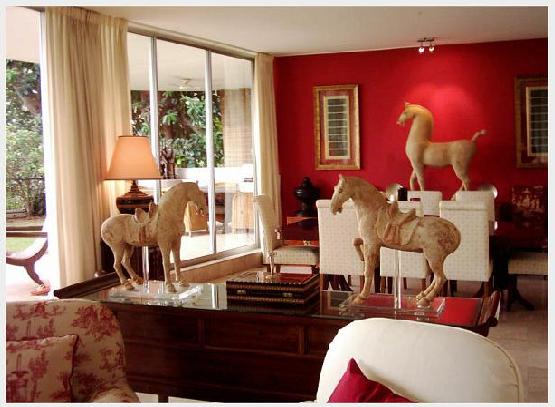
I've always had a mental list of THE coolest pieces of residential real estate on the Singapore market at any given time. This year, the list stands as such:
1. Moroccan shophouse
http://www.urbanespaces.com/a%20few%20inspirational%20homes.html
I can't imagine kids in that space- with its moody, exotic atmosphere, it somehow doesn't strike me as very kid-friendly. And possibly that adds to its 'cool' factor, in the way that Shiro, for its no-kids, no-walkins policy, is cool.
It's amazing how the Moroccan riad typology has been translated into the typology of the vernacular shophouse- how something so geographically removed can in fact be so similar.
2. A Moroccan riad-bungalow that I'm currently working on. Located on a hilltop location, with the central courtyard, three stories surrounding that courtyard, tipped by a loggia, with a roof terrace. An ongoing project:
15,100sqft of land, 8,500sqft of builtup. Asking price of $10.5m.
3. A Dutch colonial bungalow.
4. Sea Viewshttp://www.urbanespaces.com/large%20duplex%20with%20sea%20views.html
Get a bare canvas and renovate- I love those curvy walls and the seaviews it affords.
And 5500sqft in an apartment is some kind of luxury unto itself.
5. Apartments on Nassim- not for sale but are available for rental.
With a lift shaft that's decorated with chinois detailing and toile de jouy wallpaper (the chinois detailing is a recurrent theme on the main doors of the unit) and a ceiling of oakwood that recall a midcentury modern architectural style, a great balcony and excellent views of the houses around Nassim. It's a shame that it's not for sale- would be a fantasy to gut the place out and outfit it like a midcentury modern apartment.
Will keep updating this thread as we go along- could be a jaded palate but I can't seem to add more to the list.
What is it with a Black and White?
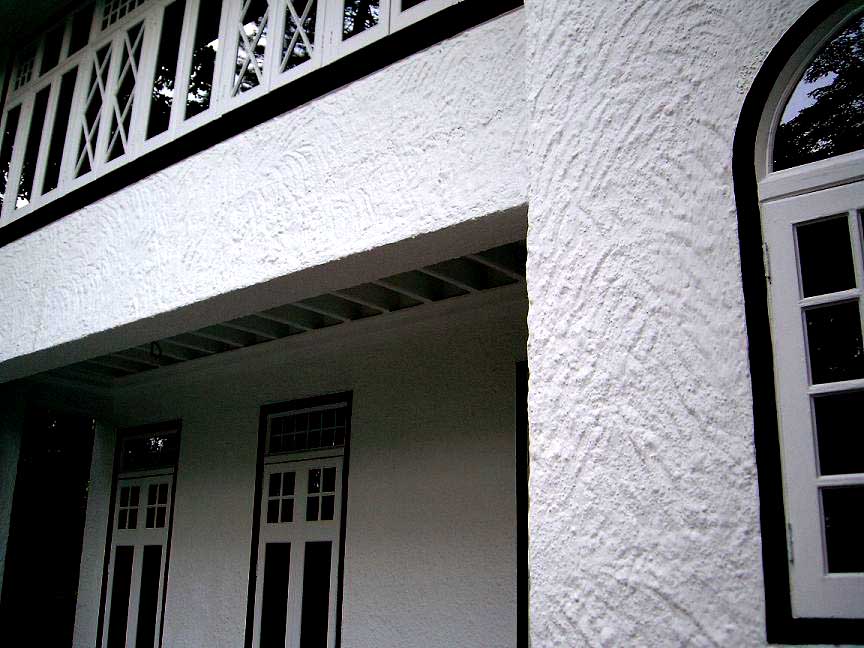
I've previously made a post on black and white houses in Singapore. Similarly, I've dedicated a page to the whole genre on the previous version of my website:
http://www.urbanespaces.com/black%20and%20white%20bungalows%20in%20singapore.htm
I think it cost me the rights to use a trip-hoppy(??) Moroccan song for my website- apparently the recording company was under the impression that my website somehow glamourises or endorses the colonial era and refused to have any association with me/us through allowing their song to be used on the main page of the site. Not even a 1,500word(!!) email explaining what I meant could rectify the damage.
Anyway... what is it with a black and white. Most times- the demand(especially for centrally located, well renovated units) exceed the supply and the waiting list is conceivably very long.
While it's not unknown for families to simply give up on black and whites after living in them for a while and trade in the old black and white for a modern house or apartment living, there is still a considerable fanbase for black and whites in Singapore; even amongst the newcomers here.
Some reasons I think black and whites remain popular:
1. Huge amount of land. WHO gets 100,000odd square feet of land in Singapore?
2. Huge amount of land= luxurious long driveways
Huge amount of land= Great parties
Huge amount of land= Huge playground for kids and dogs
3. The monochromatic colour scheme and architectural lines make it a favourite of designers and architects.
For those looking for well renovated black and white houses, register your interest with us- drop us a note from our contact page on www.urbanespaces.com
Recently there has been an increasing number of private home owners who try to recreate the black and white house on their plots of land. Some other private home owners, meanwhile, go on to subdivide the plots of land that the black and white sits on, restores the black and whites and then put it up on the market for sale. The black and whites are typically the first ones to sell in the batch.
UrbaneSpaces is currently marketing a few privately owned black and white houses(or variations of it) for sale. These include- tudor cottage homes, a Dutch colonial hilltop bungalow(interiors to be done by one of Singapore's foremost architects),
an Australian plantation home, discretely located in a hilltop location and true black and white houses in the vicinity of the Botanical Gardens.
How Conservation Got its Groove Back
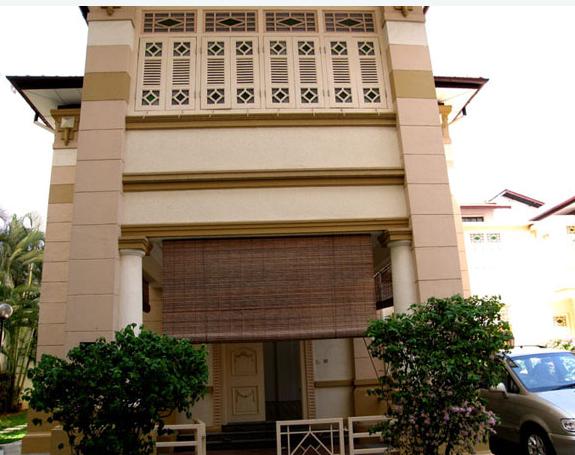
Tacky- sounding title that but conservation efforts have been given an entirely new facade with new developments that have incorporated conservation buildings within the development.
Technically a necessity(since it's a conserved building you can't raze it down and that conserved building happens to sit squarely on your coveted plot of land..), developers have been quick to turn the conserved building into a distinctive marketing advantage.
It probably first started with Spring Grove- the old American ambassador's house was converted into a clubhouse. The trend is becoming more evident now, with developments like Draycott 8(the colonial clubhouse is a major pulling factor and adds a decided atmospheric air to the development) and Nathan Place. The old house of Tan Sri Tan Chin Tuan(you would have noticed that glorious old colonial structure sitting in the middle of the Cairnhill Crest development) has similarly been incorporated by the developers- possibly as another clubhouse?
The trend is somewhat preceded by slightly older developments in Geylang and the East Coast, where old colonial houses have been compartmentalized into several houses, wirth apartments being built around it, or where a colonial house, retaining its old structure and garden, has simply been divided up into individual apartments.
The incorporation of the Peranakan conservation home within a development has been somewhat easier- with its convenient, terrace-like build, the incorporation of Peranakan shophouses had always been, to my opinion, an attempt at capitalizing on the novelty factor of Peranakan shophouses, particularly amongst locals who desire both the novelty of shophouse living and condominium facilities and foreigners who wish to purchase a Peranakan shophouse without the hassle of applying for approval to purchase.
The precedent:
http://www.urbanespaces.com/gorgeouscons.html
Trendy developments:
http://www.urbanespaces.com/eastcoastshophsefac.html
Beirut

Image Courtesy of Travelblog.org
I've always been a fan of Beirut- its charming architecture, the skiing resorts, nighttime walks along Raouche, tea at Paul's, the hip restaurants dotting Achrafieh, strolls through the main downtown square with its mosques and churches side by side that for some time, at least provided a facade of religious harmony, the cedar trees and the sight of happy schoolchildren in the Bekaa Valley; cheeks rosy conceivably from the mountain air-getting off their buses and heading home.
It's sad to hear of what's happening in Beirut. I would post some photos of Beirut here if I had them. Sadly, I've never been one to take photos and the ones that I do- have mostly been misplaced, lost or turned out blurred. I did not switch on the flash for photos of Yabani, the photo I had of a graffiti wall in khiam prison have been lost. Or possibly, I always thought that I could go back to Lebanon whenever I wanted(and photographs are just for places you never think you'd visit again).
As per Robert Fisk, 'pity the nation'- Lebanon's a low cost alternative to an actual war between the bigger players to the conflict(otherwise known as a proxy war). And as per the Lebanese president Fouad Siniora, (quoted from Roger Cohen, International Herald Tribune):'Lebanon is a wound kept open to bleed a little when it is in the interest of one of the parties'.
Courtesy of bloggingbeirut.com, below are the particulars for those looking to help with the humanitarian efforts in Beirut:
Due to the International War on Terror, donating to the wrong organization can land you in Guantanamo. To avoid a free trip to Cuba, here's a list of organizations that are safe to donate to from all countries (including the USA).
The Lebanese Red Cross
(updated)(confirmed)
Bank Details:
Account # 841500
Audi Bank
Bab Idriss
SWIFT: AUDBLBBX
Phone: +961 1 977588
FAX: +961 1 999410
(info as per bloggingbeirut.com)
- Did a check on the Lebanese Red Cross webpage- bank details are correct:
http://www.dm.net.lb/redcross/want_to_help.htm
Also check: www.donatelebanon.com
What counts as luxury in the Singapore residential market.

1. A HUGE bathroom, with the requisite his and hers sinks and standalone bathtubs(i love the claw-footed ones but the modern egg-shaped ones like those in Hills and Grange Residences are pretty swank too).
2. More than 3000sqft of space- brand new. Older apartments make the 3000sqft mark easily, with newer developments typically characterized by teeny flats, and selling at more than $1000psf. So the cold rationality behind it all is- if you can beat developer's expectations and pay the same psf amount for a 3000sqft apartment, then THAT's luxury.
3. A brand new,lowrise development- with four carpark lots. (It exists!) What this translates into is exorbitant maintenance costs- the costs of maintaining a swimming pool, carpark, security guard, etc, is divided between that much fewer residents. And an allocation for four carpark lots is way too decadent in landscarce Singapore. As is the assumption that residents would drive four cars in a city characterised by sky-high COEs.
4. A private concierge service. All the developments in my favourite, luxurious troika has access to a concierge service.
"Luxurious apartments
As the condominium market become more competitive and high-rise living becomes a conscious choice, developers have been coming up with developments promoting lifestyle statements. Developments such as the Pier, Icon, the Arris, amongst others, are targeted at a rarefied segment of society-in this case the urban young single/couple intent on living the good life.
SCGlobal , not a mega developer in the sense of having lots of projects under its portfolio, having come up with all of 3 projects so far, is succeeding in its lifestyle-marketing tack. All 3 developments are a calculated move towards projecting a luxurious, prestigious brand image. The 3 projects are: The Ladyhill, selling at $1,800psf when it was first launched, The BLVD, on Orchard Boulevard and the hip sister in the luxurious troika-the Lincoln Modern, the latter which I have covered on my segment under 'hip developments'.
Most of these apartments rent for about the same amount as a comparable semi-d with the same top finishes and quality design. Usually it is a toss-up between the grounds and privacy that living in a house affords and the convenience and security of living in an apartment. There are hidden costs of living in a house, such as pool and garden maintenance. Maintenance costs for apartment living is shared by the residents and has been included in the rental. Yet, there is also the exclusivity of having your own pool and garden for the children and dogs to run around. Security factors like having the condominium security, the card access system, etc, might also sway you to choose living in a condominium as opposed to a house although of course, some exclusive townhouses do provide security as well- giving you the best of both worlds. Ultimately, people who choose condominium living need the ease of a fuss-free lifestyle, especially if they expect to be travelling a lot. There are some penthouses with a private pool, which offers part of the exclusivity of landed housing in not having to share amenities. Yet again, this leads to the inevitable costs of pool maintenance which high-rise living is supposed to do away with in the first place. "
5. A private pool. Very un-pleb characteristic, that.
Combining Nietzsche and postmodern architecture
I hate how the term 'deconstruction' has been bastardized by the 'aesthetic' industries- applied to everything from roughly cut hemlines to a slightly offbeat architectural style.
Came across a commentary on postmodern architecture- this guy knows his Nietzsche, and applies it well to convey his derision for postmodern forms of architecture.
Would be great to find an essay that adopts a deconstructivist approach on postmodern architecture. Attempting it would be tooo delightfully pretentious.
Back to moroccan-style houses
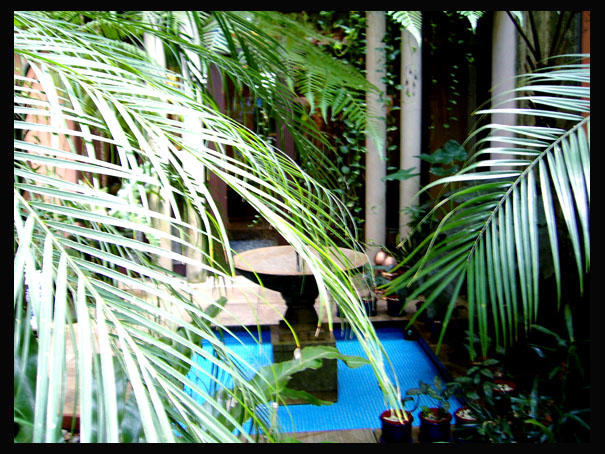
You guessed it- i have a huge crush on North African architecture. This riad-style Moroccan house looks that much better in real life than in photos- it's the whole grovvy north african vibe(yep- i heard those charges of Orientalists! out there from all those Said-ian wannabes)- one of the houses that keep me in the real estate business.
Mink Tan did an absolutely great job on this one- there's evidently a lot of restraint when designing this house- it's moroccan chic without succumbing to over the top, orientalist kitsch(kitschy is shitty by another name- milan kundera, although of course, i take liberties at paraphrasing the people i quote).
More on conservation housing(black and white colonials)
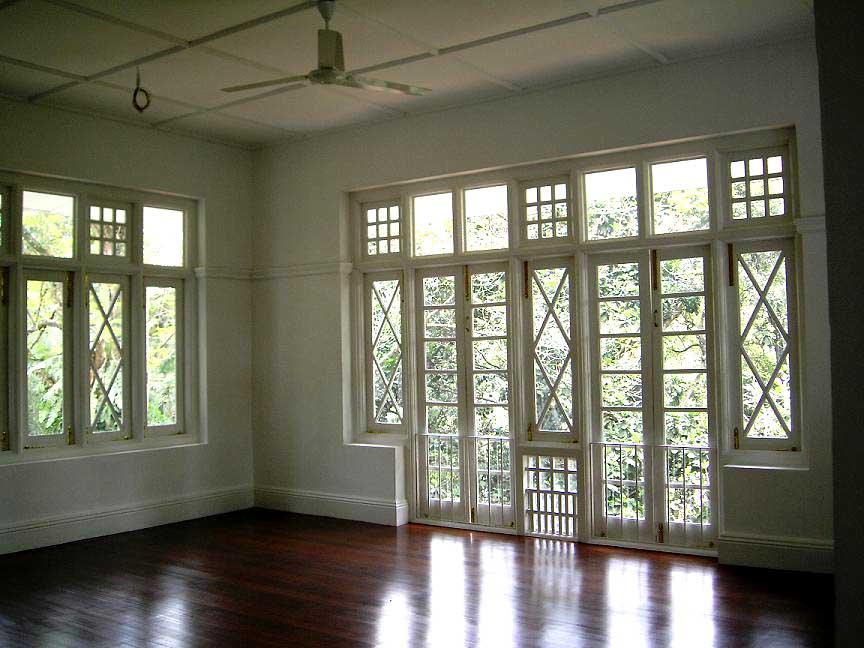
I sometimes question the relevance of colonial housing in a post-colonial context- which explains a brief reference to Nezar Al-Sayyad's essay on the role of colonial architecture in post-colonial times. Given that it's mostly expats living in black and white houses today I'd wonder if it's a form of neo-colonialism. Still, my favourite black and whites are those with ultra-modern interiors(ref:modern black and white)with as little garden as possible please- I'm inherently suspicious of overly-abundant natural surroundings. There were also photos of a black and white bungalow in the east coast in the local papers. Owned by a young couple- it combined little ethnic details like a Moroccan hunting chair that I still regret not buying and a really cool stainless steel kitchen in the extension wing.
For those who are tolerant of the odd gecko in the house and the possibility of a snake in your bedroom, the idea of keeping your own horse in your garden is too cute.
Singapore shophouses (conservation housing)
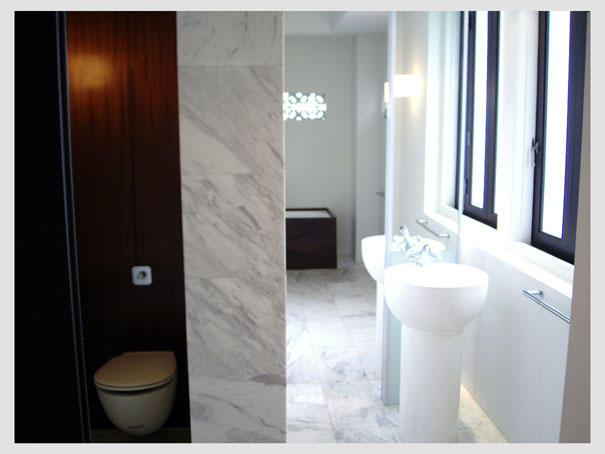
There has been a revival of interest in vernacular and colonial architecture, shophouses being a prime example of the former. Today, as a result of this new interest, we see many sophisticated works of Modernism, translating ancient vernaculars into strikingly fresh statements.
There are lots of shophouses with funky interiors on Kim Yam, a lot of them with the water features that have come to be associated with the area. The smaller units's decor range from funky boutiqe hotel interiors(with uncomfortable-looking but impossibly hip,sunken limestone bathtubs. Then there are the classy zen pieces on Emerald Hill (photos are shown here) and the eclectic design-incorporating everything from waterfalls, funky toilet designs and the traditional patios in one single house on Cairnhill.
Diverging from the well-trodden paths of the KimYam/Emerald/Cainrhill triumvirate yields surprising finds. Everton and Blair are popular choices as well, but with none of the swanky interiors typical of the aforementioned areas. Area however has a more Bohemian feel about it and is where the expat literati tend to congregate. The Petain Road area( around Serangoon road) is a well-kept secret amongst the expats. It has a small expat community residing in the row of shophouses, with an antique furniture gallery a la John Erdos along the street. The Geylang area brings you a shophouse with an interior design comparable to the ones on Emerald and Cairnhill but at a much lower rent of $6.5k
Rentals vary from $11-17k for shophouses with 4,000-5,000sqft of built up and swanky interiors in the Emerald/Cairnhill areas to $2.3k for a small studio type shophouse. Minimal renovation shophouses cost between $5.5k to $8k to rent in the popular Emerald/Cairnhill areas as well. Kim Yam shophouses are normally very funky and will please those who need modern spaces and appreciate exclusive designs over the cookie cutter interiors of apartments. The Blair and Everton road shophouses are a motley bunch-I've seen those with baroque interiors, those with minimal renovations, but neighbourhood is typically bohemian. Rentals range from $2.7k-$8k.
The chandelier on my stairwell
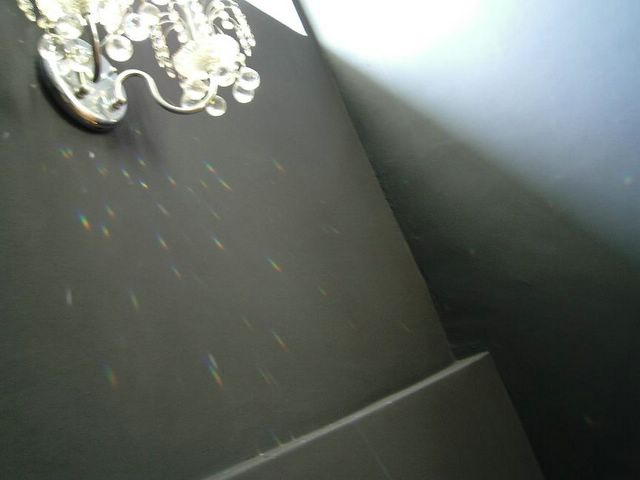
Love the light refractions against the black walls
brought to you by hello! picasa
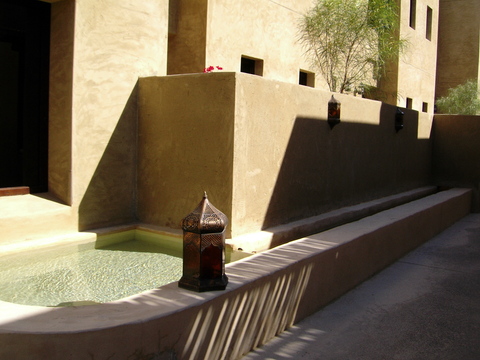
Great new desert resort in Dubai.
Was enamoured by the design in this resort- rough hewn plaster(which I tried to replicate in my apartment but to create imperfections on Singapore's meticulously plastered walls turned out to be expensive), the cast concrete floors with tribal carpet designs printed on it, the lush water features and tadellakt baths...)
Subscribe to:
Posts (Atom)